
Just one of Germany’s foremost small business educational institutions sits awkwardly in Berlin amongst the reconstructed Humboldt Discussion board museum intricate and a rose garden planted by Margot Honecker, an ex-education minister and wife of the past chief of communist East Germany.
The European School of Administration and Engineering, established to teach the country’s capitalist elite, is based mostly in the former point out council business of the defunct German Democratic Republic. It is replete with retro lights, hammer and compass emblems and a stained-glass window portraying the leftwing intellectual and groundbreaking Rosa Luxemburg.
Its environment replicate the distinctive previous attitudes to business enterprise and instruction in Germany. But in the two decades given that ESMT’s development, significantly has improved in the state, its businesses and attitudes to management, bringing about a flourishing enterprise instruction sector with ambitions to compete with worldwide rivals.
“For a lengthy time we did not have an worldwide company university in Germany on the very same degree as Harvard, Insead or IMD,” remembers Gerhard Cromme, the industrialist who chaired the team of executives who created ESMT in 2002. “We were sending our men and women to the US, the Uk, France and Switzerland. In the late 1990s, we arrived together and reported let us do some thing about it.”
In the US, Uk, Canada and Australia, quite a few universities released enterprise colleges in the course of the 20th century. Other international locations these types of as France and Spain as an alternative opened unbiased personal establishments which developed strong worldwide reputations.
But Germany was slower to acquire enterprise faculties. One particular rationale was the 19th-century legacy of the Prussian students Wilhelm and Alexander von Humboldt, soon after whom the museum elaborate in the vicinity of ESMT is named, suggests Claus Rerup, a professor of administration at the Frankfurt University of Finance and Administration, which was designed in 1957 as a specialist coaching academy for financial institutions.
“They targeted on the significance of education and learning to construct autonomous entire world citizens alternatively than to offer slender skilled education,” he suggests. The result was the domination of public, cost-free universities decoupled from enterprise training and without having selective admission insurance policies for learners.
“What is missing is an elite education and learning in Germany. Soon after the second environment war, the prevailing spirit was that university education must be open to everyone,” argues Markus Rudolf, dean of WHU — Otto Beisheim University of Management, a private enterprise university proven in 1983 in Koblenz and now with a next campus in Düsseldorf. “That spirit has not transformed. Elite is a negative term,” he adds.
Equally guys level to a conservatism and suspicion of organization as an academic discipline in the country’s public universities. “The dominance of the general public institutions is way too huge,” says Jörg Rocholl, president of ESMT. “There was completely diverse governance that did not permit for the emergence of environment-class company faculties.”
Joachim Lutz, the dean of the business college at Mannheim university, a uncommon exception of a condition establishment which opened its very own faculty in 2005 — albeit with a independent lawful position — factors to broader structural explanations. German providers targeted on featuring apprenticeships and furnishing in-residence teaching for professionals relatively than recruiting from business faculties, he argues. “During the postwar financial wonder, the occupation market place was great and the academic procedure didn’t will need to glimpse in other places,” he states.
In addition, lots of of the country’s major and most effective companies ended up industrial and production groups in sectors this sort of as chemicals, machines and vehicles. That meant employees with engineering instruction — as effectively as law, provided Germany’s strong legalistic lifestyle — were the aim of recruitment and promotions.
“Often the greatest complex experts had been promoted to administration. Germans assumed that understanding about administration arrived only as a result of experience,” says Hiltrud Werner, a former board-amount executive at Volkswagen who undertook government education programmes at ESMT.
German students attracted to Portuguese education
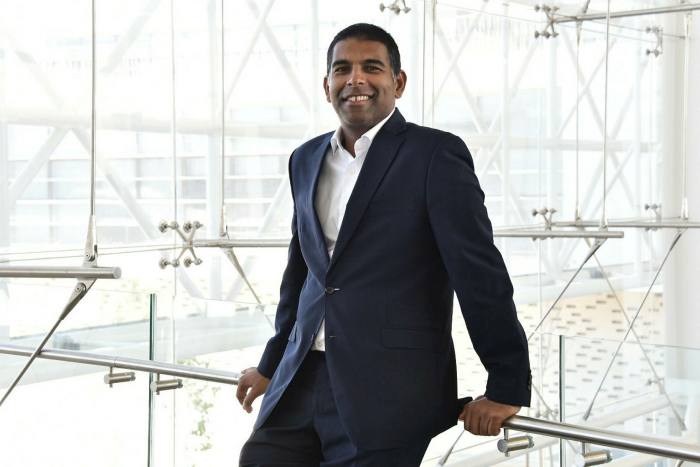
If Germans have struggled to come across establishments in their house region wherever they want to study, Daniel Traça in Portugal has reaped the advantages. As dean of Nova Business School in Lisbon, he has had to introduce a cap to cope with too much to handle demand from customers.
Throughout its 6 masters programmes, a 3rd of the 1,600 university student ingestion very last year was German, up from a quarter in 2019. ‘We have under no circumstances marketed to the place aggressively but we have experienced to introduce a limit to sustain diversity,’ he states.
One particular variable has been increasing awareness of Nova overseas due to the fact it joined the Cems alliance of major business universities extra than a 10 years ago. A next is the somewhat reduced price: fees are similar to those people in Germany and small compared with rivals elsewhere such as the British isles and lodging and other dwelling expenses are more affordable.
One more is what Traça calls the ‘Nova way of life’: solar, sea and browsing. ‘Our college students point out the local weather, social lifestyle, Lisbon scene and the campus,’ he says. He indicates that its services, nimble tactic and used curriculum distinction with at times much more traditional, theoretical German universities.
But he has made a individual work to charm to the best German candidates, bringing leading German-primarily based employers to recruit domestically, so they have the reassurance of fantastic careers again household immediately after graduating.
But that improved in the 1990s, suggests Lutz. “We had reunification and the EU’s opening of the market for products and employment. German field looked further more afield in increasing globally.”
Certainly, Werner claims German corporations are now starting to be a lot more internationally oriented, growing profits and operations overseas and recruiting foreigners with extra varied backgrounds into senior roles at dwelling. This has improved the variety of skills required of executives, boosting need for enterprise schooling. “We will need various expertise to be effective in China or Brazil. The global footprint of the German financial system has compelled management to increase their expertise,” she suggests.
Company schooling is becoming “more significant”, agrees Oliver Hennig, senior vice-president of functions at BioNTech who also attended ESMT. “It’s anticipated that technical staff going into managerial roles and negotiating contracts comprehend what is happening,” he states.
His firm, a pioneer of mRNA vaccines to deal with Covid-19, is element of the country’s increasing start off-up tradition. Rocholl at ESMT suggests college students are turning their backs on common corporate hierarchies and want to get the job done for newer corporations that are more inclusive, agile and entrepreneurial. “It will be an attention-grabbing struggle to see how mature organizations can hold appealing for younger talent.”
If organization colleges are attracting a escalating amount of German learners, they are also elevating their reputation and appeal to foreign students for masters’ degrees. The place features the prospect of professions within just Europe’s major overall economy — and the possibility for non-Europeans to get get the job done visas across the EU right after completing their scientific studies.
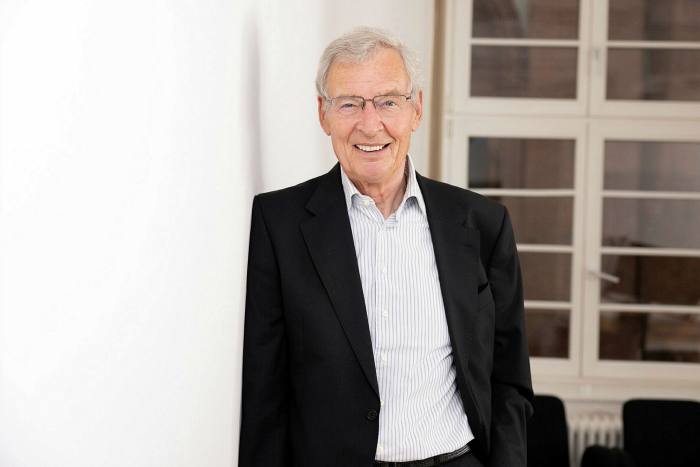
Because Brexit and Covid-19, German business schools this sort of as Mannheim have gained in two methods, suggests Lutz: contemporary desire from foreign college students who will attain access to the EU labour market place no extended open to those people who research in the British isles and domestic college students who now desire to continue being at house considering the fact that the pandemic began.
“We are based mostly in Germany but we don’t see ourselves as a German company faculty. Most of our competition are overseas,” states Rudolf at WHU. He and his friends may well not nevertheless be considered as strongly as some of its international rivals, but they have ambitions to equal their friends overseas.


More Stories
Navigating the Storm: How Market Conditions Shape Your Next Big Move
Navigating the Business Climate: How to Thrive Amidst Uncertainty
Navigating the Storm: How Smart Investors Are Thriving in Today’s Market Conditions