It was not so prolonged in the past that Jaclyn Rosebrook-Collignon and her colleagues were being dismissed as the “hippies on the third floor”. But, in excess of the 12 a long time that she has been head of sustainability and world-wide duty at Grenoble Ecole de Administration (GEM) in France, she has seen her part adjust from that of grassroots agitator to boardroom influencer.
“For many many years, people today employed to run absent from me when they noticed me in the corridor,” suggests Rosebrook-Collignon. “Now, students and faculty are coming to me and asking, what are we accomplishing to be far more sustainable and how can we go more quickly?”
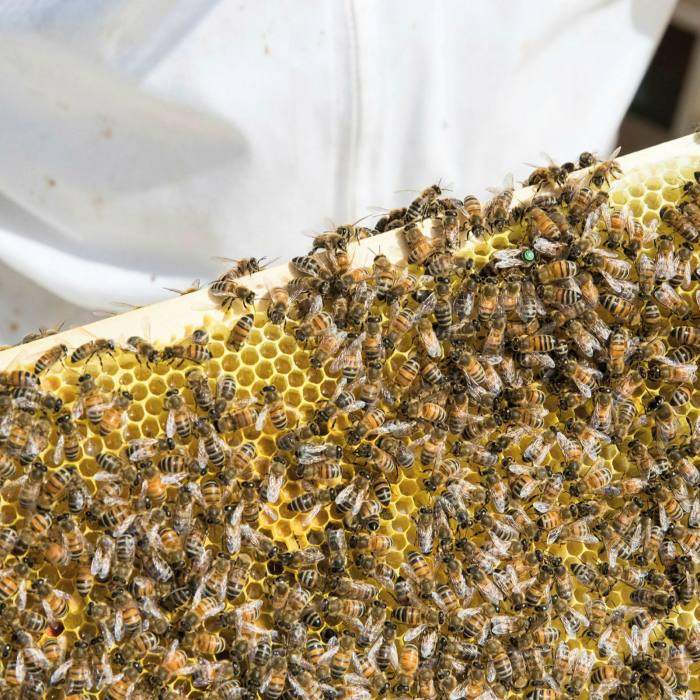
Business enterprise schools’ original response to the explosion of curiosity in environmental, social and governance (ESG) problems was a rethink of curricula, introducing related electives and programmes. Far more lately, they have been fast paced revamping their campuses, putting in new squander selection methods, photo voltaic panels, wind turbines and even bee colonies, as deans test to practise what they preach.
But, now, says Rosebrook-Collignon, business universities need to go past unconnected advert hoc initiatives, bolt-on programs and compliance checklists. To certainly “walk the talk”, they should undertake “whole organisation transformation”, she argues.
School on a mission
For GEM, that has meant adopting société à mission standing. Like advantage firms in the US, sociétés à mission are outlined by regulation as organisations that purpose to make a positive difference to modern society and the atmosphere. So much, some 100 organisations — typically massive providers — have assumed this position in France. Grenoble is the very first business school to choose the move.
What this suggests in exercise, according to Rosebrook-Collignon, is that almost everything the school does has to be steady with 5 commitments — which includes gender equality and getting to be a zero-waste school — that are connected to 1 or extra of the UN’s Sustainable Progress Targets (SDGs). Retaining société à mission position demands full disclosure of the school’s pursuits, checked by an external audit just about every two yrs.

“An frustrating bulk of our personnel and learners want to lead positively to modern society, but to allow them to do that calls for cultural transformation and genuine, strategic, prime-down action,” claims Rosebrook-Collignon. “This new status implies each individual section of the enterprise school must re-assess its annual targets by means of this prism. But it also raises the visibility of what we are delivering and the pressure on us to do what we say we’re performing. Our stakeholders, and notably our learners and school, are on the lookout for that transparency and accountability.”
Other schools have also turned to the SDGs to frame their sustainability efforts. BI Norwegian Business University has chosen SDG 13, local climate motion, as a precedence (alongside with SDG 5, gender equality) and has established out to halve its greenhouse fuel emissions by 2030. To that conclude, it is having actions that variety from installing solar panels and applying seawater cooling at its Trondheim and Stavanger campuses to serving a lot more vegetarian and regionally sourced foods in its cafeterias and reupholstering chairs as a substitute of obtaining new.

“To accomplish our local climate intention, we need to make substantial improvements to how we do the job,” says BI president Inge Jan Henjesand. “We’re perfectly less than way on lots of proportions, like cutting single-use plastics, increasing recycling premiums and reducing carbon-intensive food items. The final 12 months has also witnessed a major cut in business travel. But we need to have to continue on this momentum.”
Carbon targets
There is extensive variation in schools’ endeavours to deal with local weather change. When the FT surveyed a lot more than 140 main small business educational facilities in 2020, fewer than a third claimed that getting carbon neutral was an goal. Just more than a dozen experienced established deadlines of 2030 or before, although some others gave goal dates as distant as 2060.
Among the far more ambitious, nowadays, is Haas University of Small business. It is doing work with its mum or dad institution, the University of California, Berkeley, to be carbon neutral by 2025, for both direct emissions and indirect emissions arising from electric power consumed (its focus on for indirect emissions in other places in its worth chain — so-known as Scope 3 emissions — is 2050). Two of the 4 structures on its campus are qualified as zero-squander — defined as diverting extra than 90 for every cent of refuse from landfill.
Kogod Faculty of Company at American University in Washington DC states it has reached its goal of being carbon neutral now, after pledging in 2010 to lower its emissions to net zero inside a decade. The university and business university have produced properties extra effective, promoted eco-pleasant behaviour among the workers and learners — from switching off lights to modifying commuting behaviors — mounted 2,500 solar panels on campus and offset global journey emissions by shopping for electricity-effective stoves for rural family members in Kenya.
In April 2021, American unveiled a new 5-calendar year sustainability approach which, claims Megan Litke, director of sustainability programmes, is made to transfer “beyond carbon emissions and into the broader sustainability challenges and how they affect our communities”.
Variety first
A comparable social consciousness informs other schools’ approaches. At HEC Paris, Marcelle Laliberté states the key to achieving her plans as chief range officer is to acquire a holistic method. “It’s our operate as a business university to intersect diversity with exploration, training and action,” she claims. Initiatives incorporate a programme termed Stand Up, operate by HEC’s Innovation & Entrepreneurship Heart, which is aimed at girls from disadvantaged backgrounds.

Likewise, the Paris department of Creative Destruction Lab (CDL) — a seed-phase programme co-led by HEC entrepreneurship professor Thomas Astebro for technological know-how start-ups — tries to endorse a fairer gender balance in the sector. Applicants are questioned to give demographic data, which includes gender, which permits CDL to choose its success. The gender blend amid entrepreneurs admitted to the programme is also monitored with a view to identifying any bias versus female-launched firms.
Astebro suggests its software-scoring mechanism means 45 for each cent of CDL-Paris’s ventures have a feminine founder, while virtually 30 for each cent of the programme’s mentors are gals. To put this into context, companies with entirely female founders accounted for just 2.2 for each cent of world-wide venture funding in the initially eight months of 2021, in accordance to start off-up platform Crunchbase.
“That purely natural reflex — exactly where we check with ourselves thoughts like, are we thinking about gender or are we thinking about disabilities? — is substantially much more dominant than it was even three a long time ago,” claims Laliberté. “There’s a aware awareness now of integrating variety into the steps we choose from the outset, as opposed to [treating] it as an afterthought.”
The winners of the FT Dependable Business enterprise Education Awards 2022 will be introduced on January 19


More Stories
50 Profitable Small Business Ideas You Can Start with Less Than $1000
50 Profitable Small Business Ideas to Start with Minimal Investment
Unlock Your Entrepreneurial Spirit: Small Business Ideas That Spark Joy (and Profit!)